History
A long line of
quiet rows.
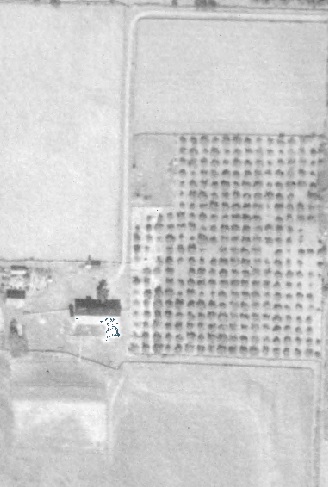
Aerial photograph, 1932.
Long before us, the land was already an orchard. This 1932 aerial shows the trees laid out in a near-perfect grid — row after row, tidy and considered, the way an orchardist measures off a lifetime of work. The same shape of the place is still visible today, if you know where to look.
Then & now
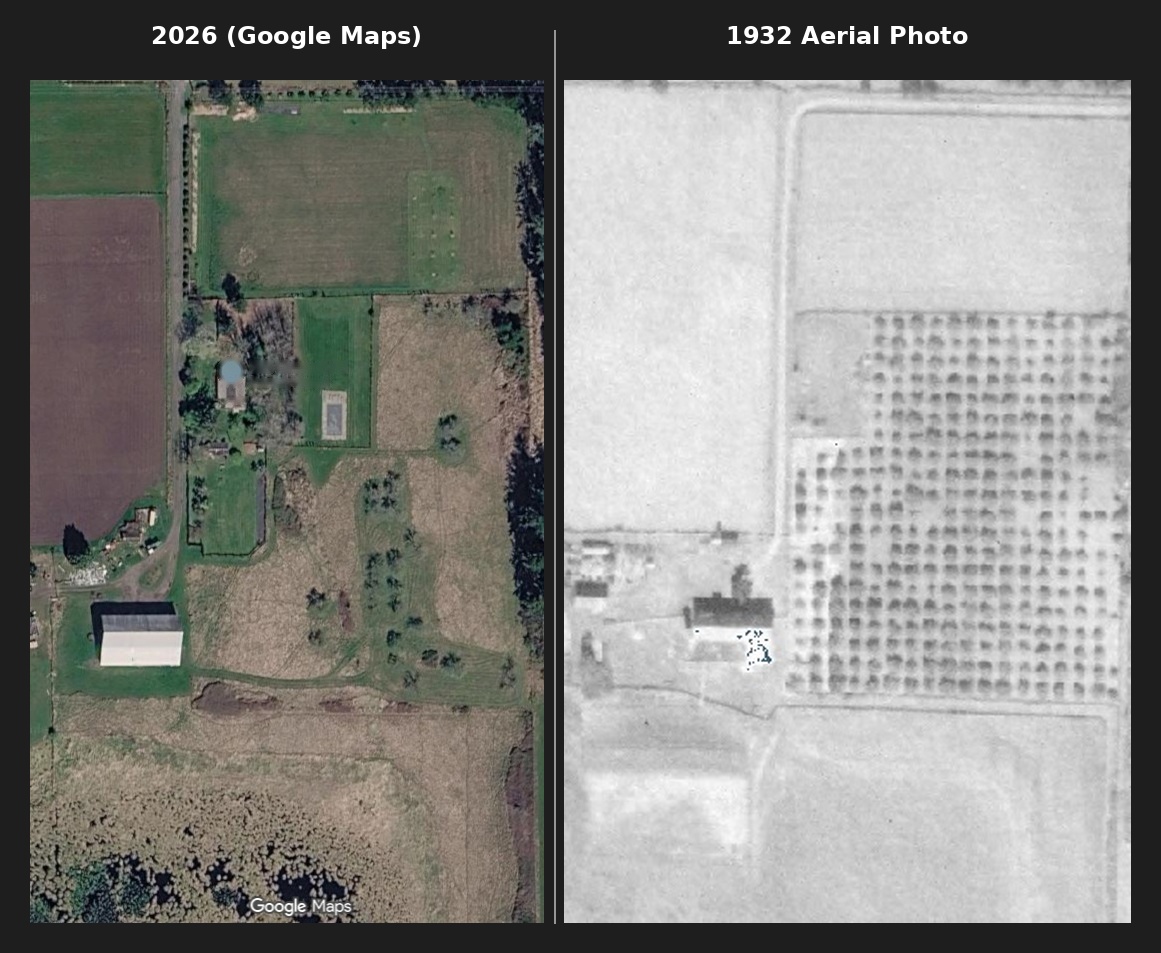
Nearly a century apart — the grid has softened, but the bones of the place are still there. If you look closely in the current photo, you can see that we are restarting the grid with young trees just north of the original orchard.
The little cluster of buildings along the western edge is where the farmhouse and barns stood. The largest of those — still standing nearby — is the Edson Weeks barn.
The Edson Weeks barn
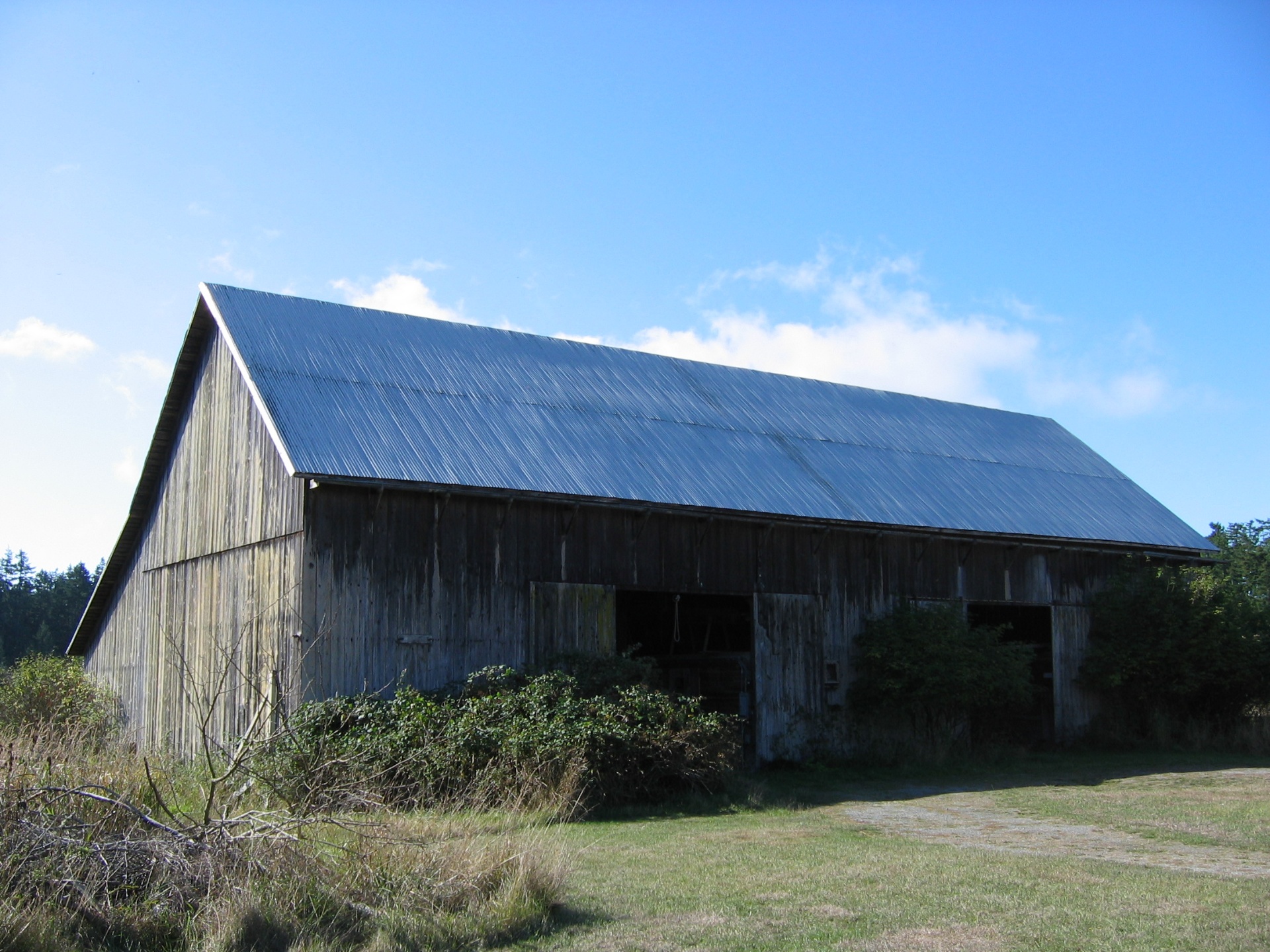
The Edson Weeks barn is singular in that it has a five-bay, timber-frame bent system with two center drives. The structure is large — 62′ wide by 100′ long — and tall, at 38′4″.
The main space under the gable roof, which is 40′ wide, held the hay mows. The 22′-wide shed that forms the broken gable on the south side once contained as many as 22 stations for milking, complete with mangers, stanchions, and a manure gutter.
It's the kind of building that reminds you how much work this land has already seen — and how lucky we are to be its current keepers.